They don’t jump 36 feet into the fucking sky do you know how terrifying that would be the human race wouldn’t have survived because we’d have all had heart attacks while still in Africa
This is one of those legendary posts that’s been around since I first made a Tumblr. When I didn’t have access to my Tumblr for a few years I would sometimes reference this post. Iconic lol
When I was 14, I was in an exchange programme between my Dutch school and a German school. We all stayed at each other’s houses, we were each other’s host families. On day two of us Dutchies being in Germany after arriving in the city the evening before, we were on a bus. 25 German teens, 25 Dutch teens, and two teachers each from each school.
The driver starts driving us to the first excursion. The German teacher who was in charge of the whole programme takes the microphone and asks the whole bus the question:
“Seid ihr gestern gut klargekommen?”
In German, this means as much as: “Did you all get along well yesterday?”
Suddenly the 25 Dutch kids burst out into hysterical laughter.
The German teacher looks at us helplessly, no idea what he’d done wrong. My own teacher jumps up from his seat, and grabs the microphone from him, and yells in Dutch:
“HE WANTS TO KNOW WHETHER YOU’RE GETTING ALONG OKAY!”
You see, in German, “klargekommen” means “got along”.
In Dutch, “klaargekomen”, which is pronounced exactly the same way, means “had an orgasm”.
To these Dutch kids with only basic levels of German knowledge, this unknown teacher just asked them if they all had a good orgasm last night.
Fantastic advice!! And something I’ve realized I’ve been doing for myself these last 6-7 years, even though I never had a name for it.
Seriously, this is such a great way to go about organizing your home.
I really can’t express how much easier your life can be when you accept that there’s no objectively right way to do this kind of stuff, especially when you let go of the idea that it’s a moral failure when you can’t do something the “correct way” nor is it evidence of you being lazy.
Working with (leaning into) your natural limits and instincts can do wonders for you in your day-to-day life.
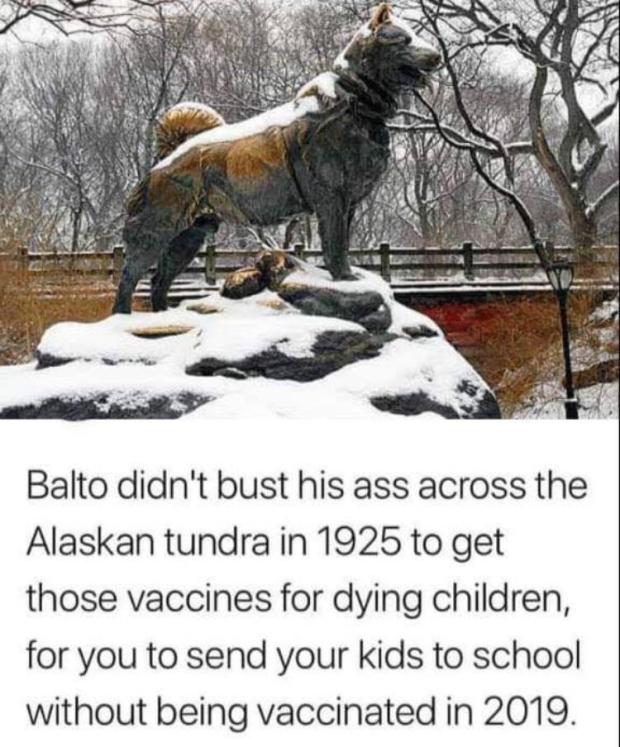
The story of Balto is interesting. He led a team of sled dogs across the Alaskan wilderness in the dead of winter with diphtheria antitoxins to stop an outbreak in Nenana Alaska. Diphtheria is a deadly infectious disease that could wipe out a third of a town’s population. It is mostly unknown to the public today because of vaccines. Balto’s body is preserved in the Cleveland Museum of Natural History.
He’s a big hero of mine!
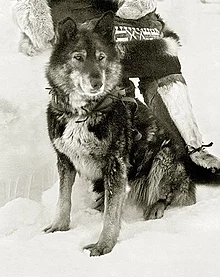
Let’s not forget Togo! Who, at 12 years old during the serum run, lead his team 200 miles through much more dangerous conditions during the first leg of the journey before Balto ran the last 55-mile stretch.
Togo and Balto didn’t bust their asses for dying children for you to turn around and not vaccinate your damn kids
The actual story is fascinating.
The town of Nome, situated in Western Alaska, was a relative hub for even smaller communities in the region, but in winter was utterly cut off from… nearly everywhere. The harbour iced over in winter, there were no roads connecting it anywhere else, the nearest railroad line was nearly 700 miles (1000+ kilometres) away in Nenana. Air travel was still new at the time and planes couldn’t handle the inclement winter weather.
In 1924, the community had a single doctor and a few nurses who served approximately 10 000 people, including large Eskimo populations in the area (the town itself had a population of roughly 1000 people – bear in mind how few children lived in this community when you see the casualty counts). He had realized his diphtheria vaccine stock was expired and had ordered more from mainland USA months earlier. When it failed to arrive on the final ship of the season, he was a little concerned, but diphtheria was fairly rare, and he figured he’d just restock in the spring.
Of all the rotten luck, January 1925 was when a diphtheria outbreak hit the region.
There was a scramble, in the mainland USA as well as Alaska, to find a way to get the vaccine to this town in the middle of winter. There were attempts to fly a vaccine supply over, but the planes were grounded by storms. This was part of the United States in the 1920s. There was no way to get there.
Except by sled dogs, running the vaccine from that train station in Nenana, 674 miles away. Over 1000 kilometres away, in the dead of winter in Alaska, by 20 mushers (mostly native Athabaskans) and 150 sled dogs running in relay, switching off at tiny villages and rest stations along the way. It was bitterly cold. As in, -85°F (-60°C) at the coldest. There were blizzards, hurricane force winds, and at some points visibility was so poor the men couldn’t see their dogs in front of them.
No man or beast should have been out in that. You freeze in seconds if you’re not moving. Multiple dogs died from being run so hard in such cold weather. Mushers grappled with hypothermia and frostbite. One needed hot water poured over his frozen hands because he was frozen to his sled. Another’s face was black with frostbite. Some strapped themselves up and lead their packs when their lead dogs collapsed.
This relay team traveled 674 miles in 5.5 days. Togo and his owner, Leonhard Seppala, did by far the longest and most dangerous run, travelling over 260 miles (about 420 kilometres) including the initial travel to his pickup spot. Gunnar Kaasen and his lead dog, Balto, did the final 53 miles (85 kilometres) into Nome, where they were greeted as heroes.
Prior to the vaccine arriving in Nome, 5-7 children officially died of diphtheria, with dozens of confirmed cases who may well have died without treatment – but it’s suspected the surrounding Indigenous communities were much harder hit, with numbers impossible to confirm.
When you think that this happened less than 100 years ago, how desperate this community was for a vaccine, how much these mushers risked and lost to get it to this town as fast as they possibly could…
I wonder what they’d think of people today.
(this is the Iditarod. this trek to deliver vaccines was so important, that we immortalized it the way we immortalized the marathon.)






 amhrancas