I know I’ve said it before but every rewatch I do cements this thought further – elijah wood’s performance in LOTR is absolutely insane, they really had a character whose name means “wise by experience”, hired an 18-year-old to do it, and he delivered so much that not only is it a beautiful and moving role on its own, it’s a performance equal to those of the absolute powerhouses he played side by side with like ian holm and ian mckellen. to name just a few
apparently it’s not common knowledge that he was 18 at the time (insert that xkcd comic, you know which) but. yeah
“let’s task this teenager with the monster assignment of portraying trauma of war in a quiet and subtle way. what can go wrong” and then somehow nothing did. because he killed the role
Sometimes people use “respect” to mean “treating someone like a person” and sometimes they use “respect” to mean “treating someone like an authority”
and sometimes people who are used to being treated like an authority say “if you won’t respect me I won’t respect you” and they mean “if you won’t treat me like an authority I won’t treat you like a person”
and they think they’re being fair but they aren’t, and it’s not okay.
imagine if people still took last names from their trade like fisher, smith and fletcher. imagine some guy introducing himself to you as jonathan podcaster
April 20, Beijing, China, National Museum of China/中国国家博物馆 (Part 1 – Dehua white porcelain exhibition/德化白瓷展):
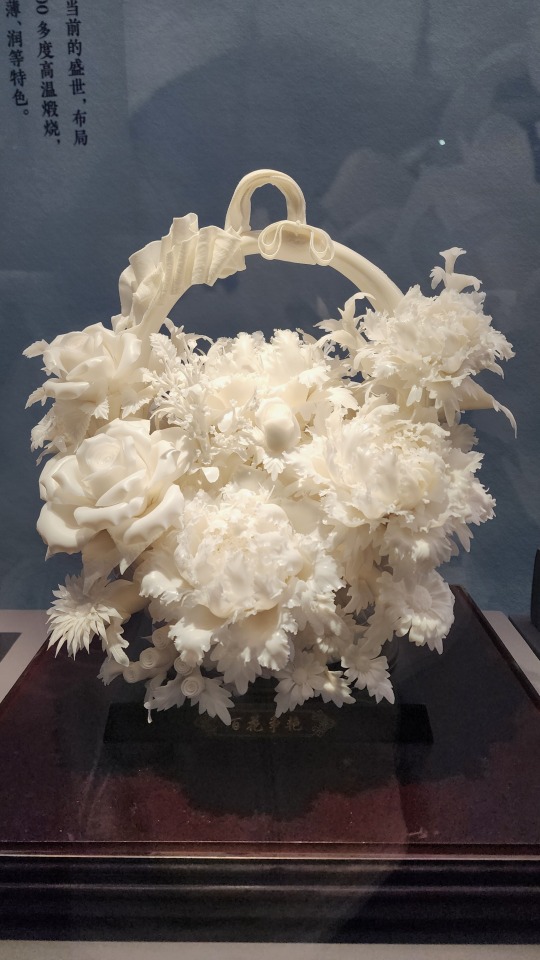
Aaand finally, the National Museum of China/中国国家博物馆! I was lucky enough to see the famed Dehua white porcelain exhibition/德化白瓷展 here. Some of you may recognize some of these pieces already, since pictures and shorts of them have been circulating online way before I went on this trip, but there are many many other pieces too. The pieces I post here are only a small portion of the entire exhibition, so if you ever get a chance to see the exhibition elsewhere in person, don’t hesitate. This stuff is amazing.
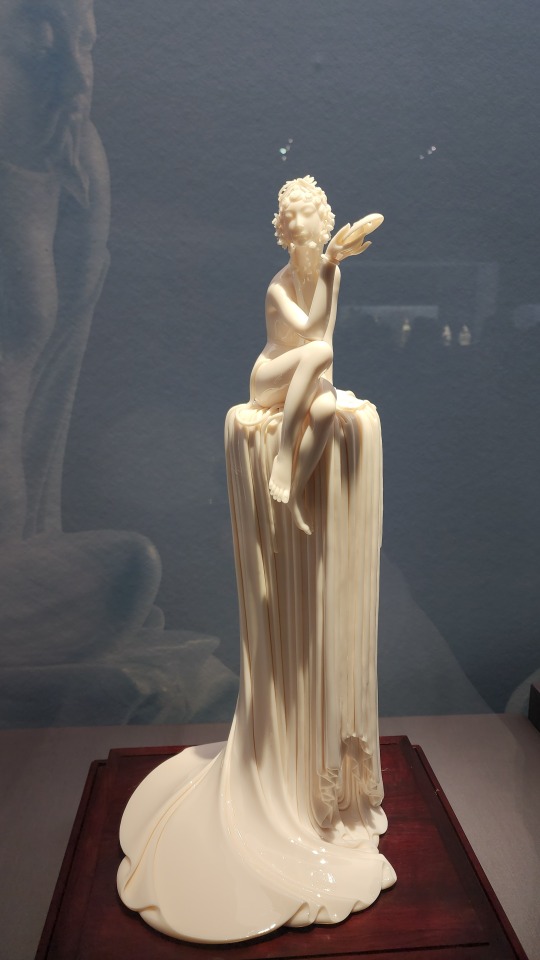
First up is one of the two that has been gaining popularity online, the piece named 神话 or “Legend”.
The first time I saw a porcelain piece like this, I thought that the clothing part was made with paper? But no, the light fabric of the clothing, the hair, it’s all porcelain. Keep in mind when looking through these pictures: every part of every piece is porcelain.
This piece is the other one that was becoming popular, the piece named simply 纸, or “Paper”. If you don’t look up close and see the glossy surface, you can’t tell it’s actually porcelain. I cannot for the life of me imagine the kind of magic that was used to turn clay into this
Anyway, this is a good point to introduce Dehua porcelain a little bit. Dehua porcelain is a regional specialty of Dehua/德化, which is located in Fujian province, and is known for its expressiveness and white color. For this reason it’s also known in the West as “Blanc de Chine” (French: “white of China”), and this should be the reason why this exhibition is named 中国白, which basically means the same thing. The history of Dehua porcelain goes back to Song dynasty (960 – 1279), and it is still being produced today. Many of the pieces I’m posting here are modern pieces.
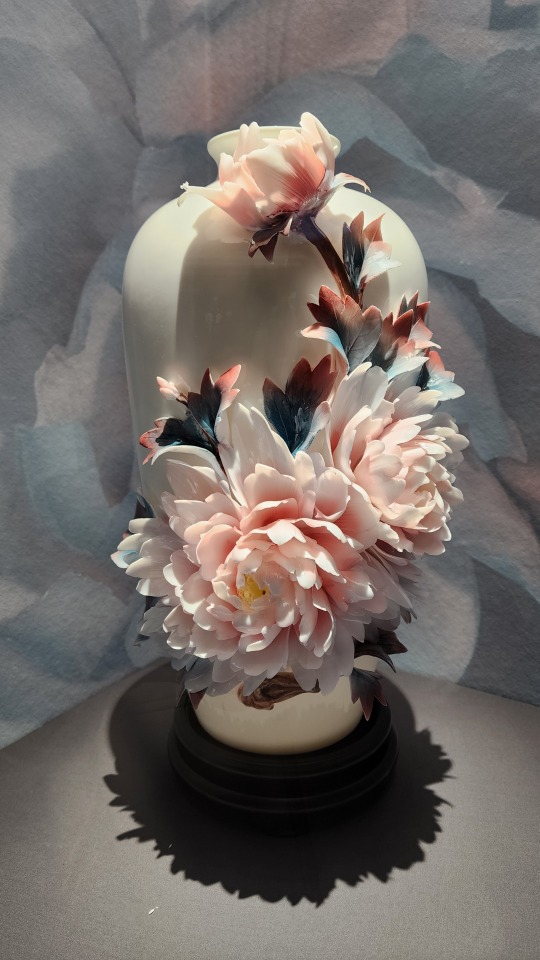
But Dehua white porcelain can be colored too (I imagine the color must be painted on later, because the white comes from the clay itself), and when it is colored, it looks like it came right out of a painting
This piece is especially amazing to me. Look at the texture, look at those details. Zoom in and you will find that there are actually a bunch of porcelain ants on this porcelain tree stump. Porcelain ants. I never expected to use porcelain as an adjective when describing ants. Wtf. It’s like a manifestation of a scene from an older animated movie.
Peanuts are called 花生 in Chinese, which literally means “flower grow”, and because it also has a long shelf life, it symbolizes longevity and a happy marriage. Also a fun fact: because Watson of Sherlock Holmes is usually phoenetically translated as 华生 (huá shēng) in Chinese and sounds similar to 花生 (huā shēng), you will find that many in the Chinese SH fandom refers to Watson as “peanut”.
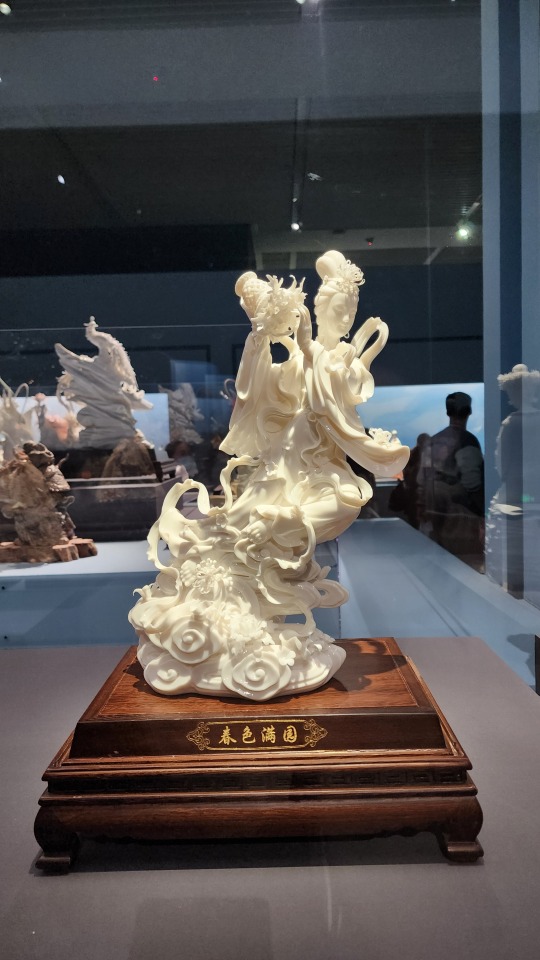
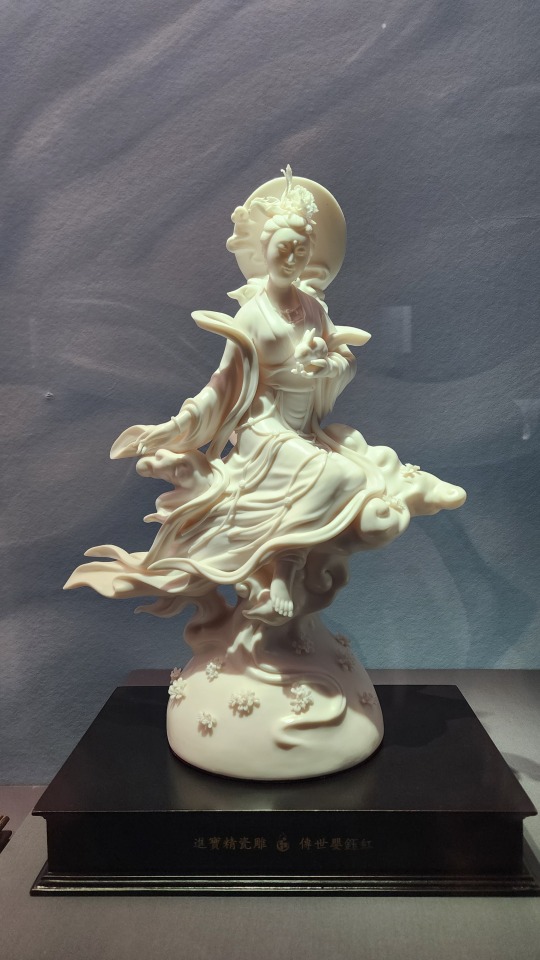
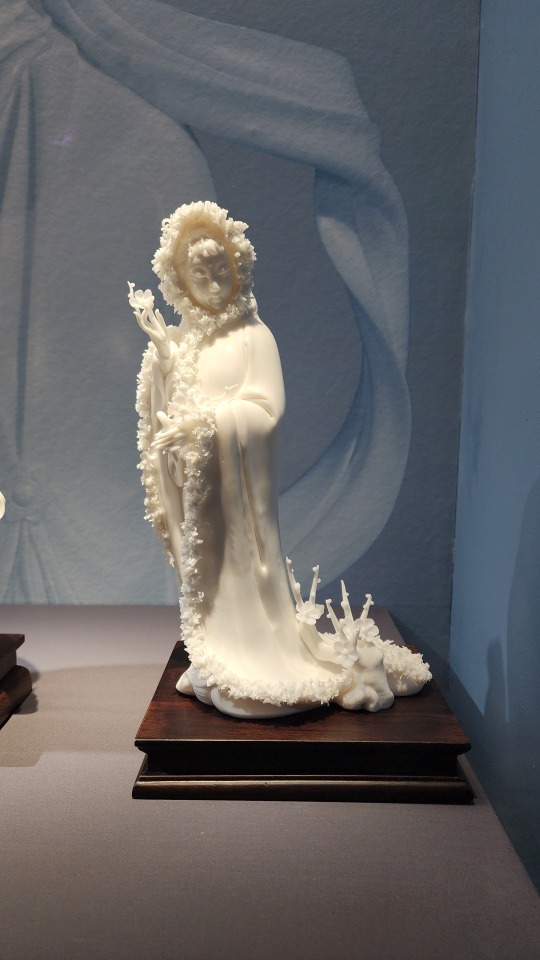
This piece is titled 春色满园, or “garden filled with spring scenery”. This is also a common 4-character word used to describe gardens in spring. I’m guessing the figure depicted here is one of the flower gods. It is one of my personal favorites because of its superb depiction of movement, it’s as if the flower god will really fly away on clouds at any moment
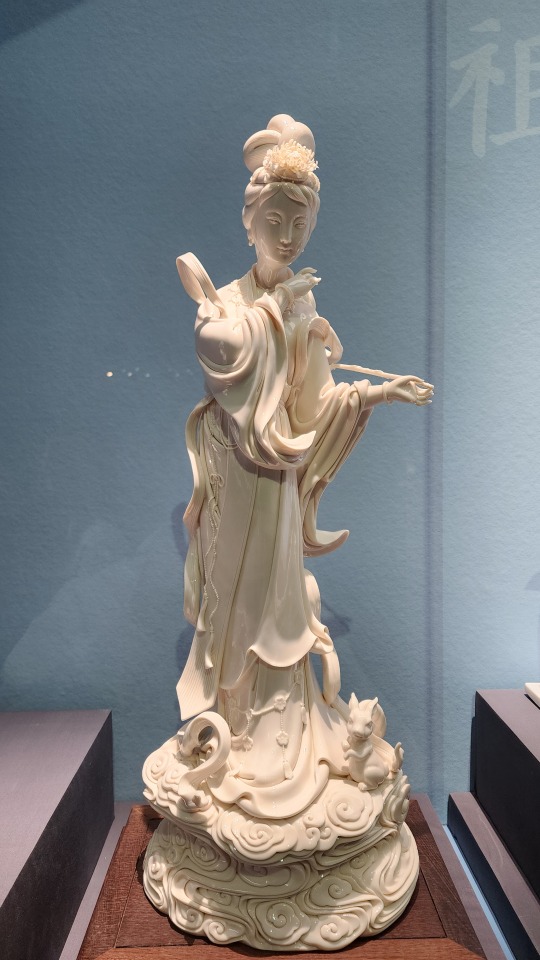
More depictions of traditional Chinese deities, specifically Chang’e/嫦娥, the moon goddess. That moon rabbit is too cute.
Depictions of what I’m assuming is the Four Heavenly Kings/四大天王, based on the items they are holding. The Four Heavenly Kings are Buddhist deities.
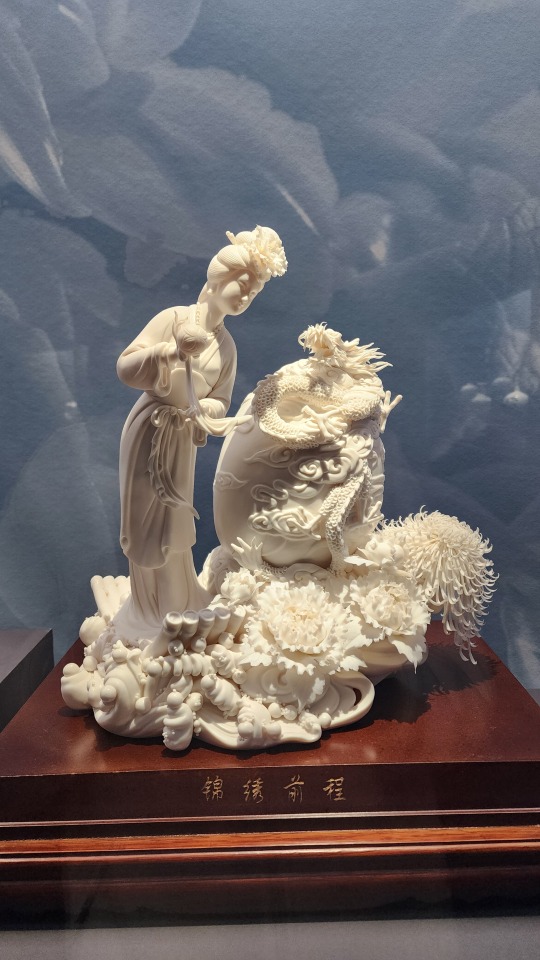
The piece titled 锦绣前程, or “future as vibrant and prosperous as silk brocade”. This is also a common 4-character word used in well wishing. The figure in this piece is holding a xiuqiu/绣球, a ball made of silk, which was usually seen as a token of love
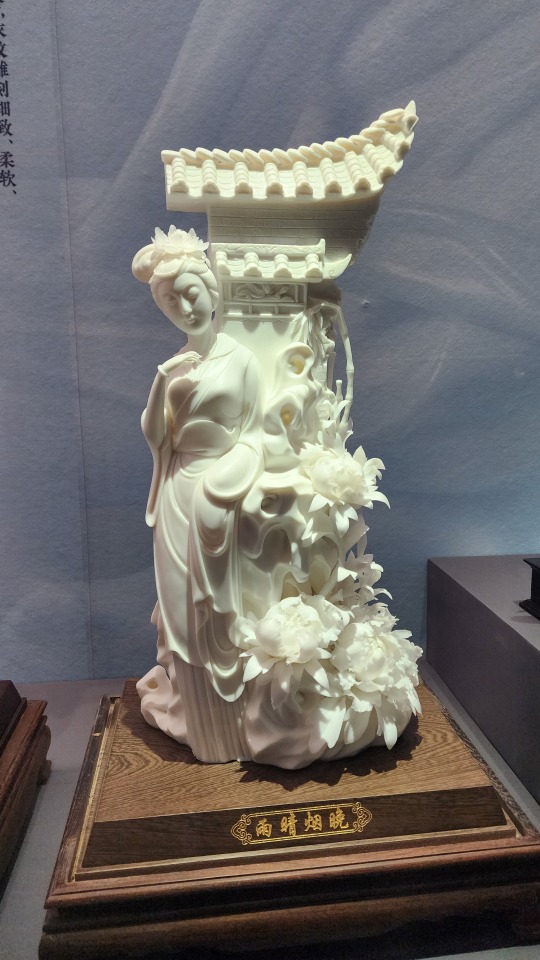
Somewhat more modern-themed pieces:
Among the hundreds of amazing pieces, this one caught my attention for its unique texture. When everyone else was trying to turn the clay into these thin sheets representing fabric or paper or flower petals, this artist took the noodle approach. Not many visitors seemed to like it, but I think it’s pretty cool
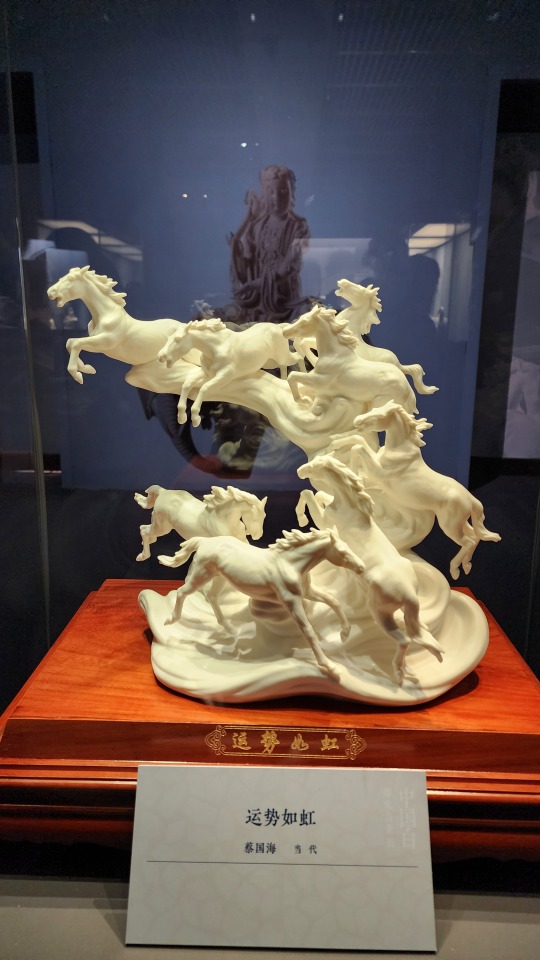
Piece titled 运势如虹, or “fortune like the rainbow”, also a 4-character word used in well wishing. Traditionally horses symbolize vitality and success, hence why many people use the words 马到成功 (“horse’s arrival brings success”) and 龙马精神 (“vitality of dragons and horses”) in well wishes during Year of the Horse
Stay tuned for Part 2 of the Dehua white porcelain exhibition!
For those of you who said “I need to do this” and are local to Maryland, the Baltimore Rock Opera Society (bmorerockopera on Instagram) is hosting a Puppet Karaoke night next week. Just in case you do not already have Thursday plans.
Most recent reblog is from 2/6/2025, so anyone from Baltimore should turn up next week!










ALT
 amhrancas