“they don’t do muppet movies anymore bc they’re not popular enough to be profitable—“ america loves the muppets!!!!! they’re our lil darlings!!!!!!!! stop pretending no one knows them anymore and start actually letting them be our felted celebrities again!! put miss piggy back on cooking shows / a special w martha stewart. have a talk show host interview kermit like joan rivers did. adapt a popular literary classic w the muppets and one (1) main human. let them make cameos. start acting like they’re REAL again bc in our hearts they ARE
When you go to sleep in the evening, dream during the night, and wake up in the morning, do you think of the dreaming having occurred yesterday or today?
Yesterday, because “today” began when I woke up
Today, because it was already this calendar day when I was dreaming
The night is sort of an in between, I would call it neither or both
MRI of a neuroscientist kissing her 2-month-old son offers a modern, unforgettable take on the classic mother-child portrait. They’re curled up inside a 3 Tesla MRI scanner, surrounded by its loud beeps and bangs. Despite the noise, the baby sleeps soundly on his mom’s chest, allowing for a clear image of their brains. Capturing this took several minutes, and even a millimeter of movement could blur the scan.
For some, this image highlights the delicate nature of human life; for others, it symbolizes the timeless connection between any mother and child. The contrasting brain structures-smaller, smoother, and darker in the baby-make this moment even more fascinating. [x]
This is Dr. Rebecca Saxe. The source listed here goes to some guy’s instagram instead.
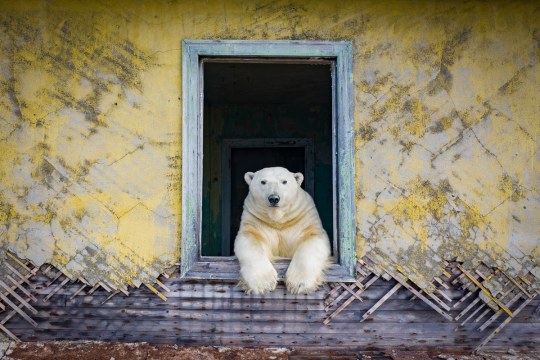
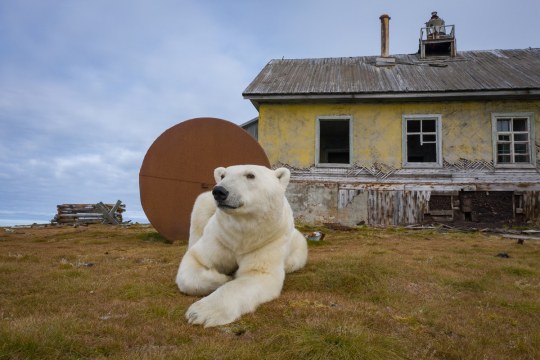
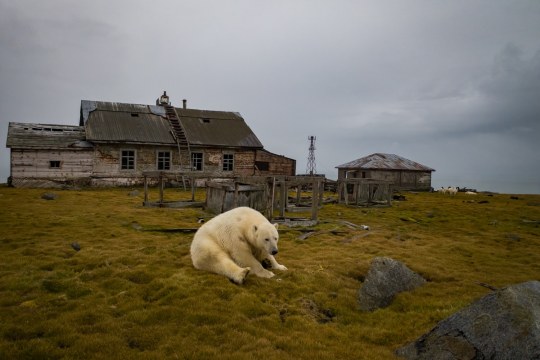
Polar bear Station Russian-based wildlife photographer Dmitry Kokh ventured to an abandoned meteorological station on Kolyuchin Island, where polar bears have taken over the station.
Sometimes I think about how and why some people had such a *bad* reaction to the end of Steven Universe, specifically in regards to the Diamonds living.
Even though they no longer are causing harm to others and are able to actually undo some of their previous harm by living, some folks reacted as though this ending was somehow morally suspect. Morally bankrupt, even.
And I think it might be because so many of us were raised on a very specific kind of kids media trope:
They all fall to their deaths.
Disney loves chucking their bad guys off cliffs. And it makes sense- in a moral framework where villains *must* be punished (regardless of whether their death will actually prevent further harm or not), but killing of any kind is morally bad for the hero, the narrative must find a way to kill the villain without the protagonists doing a murder.
It’s a moral assumption that a person can *deserve* to die, that it is cosmically just for them to die, that them dying is evidence that the story itself is morally good and correct. Scar *deserves* to die, but it would be bad for Simba to kill him. So….cliff.
Steven Universe, whatever else it’s faults, took at step back and said “but if killing people is bad, then people dying is bad”, and instead of dropping White Diamond off a cliff, asked “what would actual *restorative*, not punitive, justice look like? What would actual reparations mean here? If the goal is to heal, not just to punish, how do we handle those who have done harm?” And then did that.
Which I think is interesting, and that there was pushback against it is interesting.
It also reminds me of the folks who get very weird about Aang not killing Ozai at the end of Avatar. And like, Ozai still gets chucked in prison, so it doesn’t even push back on our cultural ideas of punitive justice *that much.* and still, I’ve seen people get real mad that the child monk who is the last survivor of a genocide that wiped out his entire pacifist culture didn’t do a murder.
Quick question: how do you do “restorative justice” for a man like Frollo who actively tries to commit a genocide?
Hitlers exist. They need killing.
There are other ways to remove a person’s ability to wield political and social power to commit genocide than dropping them off the side of a burning building that are all just as effective.
I’d also like to point out that the idea that you can prevent a wholesale genocide by like, killing the RIGHT individual, is a rather…simplistic understanding of what causes genocide.
Frollo, to use him as the example, is a priest (in the book), and a judge (in the Disney movie.) He’s not just a bad guy. He’s an extention of the Catholic Church/The State (depending on which version you want to lean on here.) His power to do harm comes from his position within those institutions and the power of those institutions themselves. The persecution of the Roma people within France isn’t because there was a bad guy, but because of those systems of power being used to kill the people that the church and the government wanted dead. Frollo getting dropped off a building wouldn’t stop the persecution of the Roma in any world that isn’t, maybe, a Disney film.
In the real world, it’s very easy to hold up Hitler as the boogeyman. But if Hitler had died, but the war machine of Third Reich Germany hadn’t lost the Battle of Berlin/the War as a whole, the Holocaust wouldn’t have magically stopped just because 1 guy died.
Look. I’m not saying that there’s never been a situation in the world where killing 1 guy wasn’t the objectively best option in a high stakes, immediately dangerous situation. The world is full of Trolley problems and self defense situations and nuance and context.
But this post is about Restorative vs Punitive Justice *systems*, and about how many people, in general, start and end their analysis of Justice with “did the bad guy get killed?”
I would even argue that this mentality, where as long as you are sure in your heart that it will SAVE LIVES, killing people is just and good and shouldn’t be questioned because some people are just bad- that mentality? Forms the core of Police killings in our culture. Justifies shooting first and asking questions never. Because once you decide that someone has done harm, they need to die for there to be Justice?
I dunno. I just think maybe as a society, we should be open to…other ideas on the matter.
This website is too mobile focused these days. Reblog and tell me what your desktop/laptop background is.
Girl help people in the notes are calling me rich and privileged for owning a computer.
Guys if your definition of wealth is “owning a computer” then I’m sorry but you’re not ready for the revolution. Listen, when the lord of the land makes his subjects stand in the open rain, their enemy is not the man who wore a hat.
Did everyone somehow just forget that Russia was the one who started the war on Ukraine? That Russia invaded Ukraine apropos of nothing, and has been doing everything it can to steal what it can and destroy what it can’t? That Ukrainian kids are being stolen by Russia for russification? That Russia is actively trying to suppress Ukrainian language, culture, and national identity? That Ukraine is just defending itself and is literally just asking for Russia to fuck off and leave them alone? Did everyone just forget that??
Like I’m the nuance guy, and folks: there’s no nuance here. There is no justification for this invasion. There is a clear aggressor and a clear victim. This is about as clear cut as it gets.
Russia started the damn war, and now wants it to end and is negotiating with the US (not Ukraine??) to get there. This is literally just wrapping up Ukrainian surrender to Russian imperialism in a pretty bow and calling it “peace.”
How are we in the timeline where Mike Pence has to step in as the voice of reason??
[Also per many of the tags: I am well aware of the fact that there are a lot of reasonable people around the world who have not forgotten. What is terrifying to me is the number of people who have fully drunk the maga and/or tankie kool-aid and are buying (or supporting) this attempt to rewrite history]
I feel like many people have a fundamental misconception of what unreliable narrator means. It’s simply a narrative vehicle not a character flaw, a sign that the character is a bad person. There are also many different types of unreliable narrators in fiction. Being an unreliable narrator doesn’t necessarily mean that the character is ‘wrong’, it definitely doesn’t mean that they’re wrong about everything even if some aspects in their story are inaccurate, and only some unreliable narrators actively and consciously lie. Stories that have unreliable narrators also tend to deal with perception and memory and they often don’t even have one objective truth, just different versions. It reflects real life where we know human memory is highly unreliable and vague and people can interpret same events very differently
Some types of unreliable narrator:
The Watson: is present for the event but does not have the same level of perception as protagonist
The Lemony Snicket: isn’t present for the event, reconstructs the facts based on later research, can get things wrong or incomplete
The Ted Moseby: is present for the event but has romanticised and embellished their memory of it through nostalgia to an extent that you cannot fully believe it; is also prone to misremembering or outright forgetting details.
The Katniss Everdeen: is present for the event, is the protagonist, but is completely foreign to the world and out of their depth so they don’t quite understand a lot of what is going on.
The Rose Quartz: is present for the event, but due to their personal agenda or feelings of shame hides and embellishes what actually happened in favour of a version that paints them in a better light.
The Big Brother: overwrites what actually happened in favour of propaganda.
The Jonathan Harker: is absolutely clueless about what is going on around them and the genre they’re in so their perception of events is tinted by their own naivety.
The Goob: the narrator’s own emotional bias clouds their judgement of what really happened.
The Tyler Durden: the narrator is suffering from hallucinations and doesn’t realise it.
The Pi: the narrator has survived a traumatic experience and copes with it by turning it into a wonderful tale.













 amhrancas